
Most people go years, sometimes decades, without ever needing to call a recovery truck. Which means when it finally happens — the engine won’t start, a warning light flashes red, or a collision leaves the car undriveable — there’s no instinct to fall back on. What do you say on the phone? How long will it actually take? Is the price they quote the price you’ll pay? Will your car end up somewhere sensible? This guide walks through exactly what to expect from your first vehicle recovery in Birmingham, from the moment things go wrong to the moment your car is safely dropped off.
Step 1: Recognise You Actually Need Recovery
Not every problem needs a tow truck. A flat tyre you can safely change yourself, a battery that jump-starts and runs fine afterward, or fuel you can top up at a nearby station don’t necessarily require recovery. But a few signs mean it’s time to call for professional help rather than trying to fix things yourself:
- The engine won’t start at all, even with a jump-start attempt.
- A warning light (especially a red one) appears alongside unusual noises, smoke, or a burning smell.
- You’ve been in a collision, even a minor one, and the car doesn’t feel or sound right to drive.
- You’re stuck somewhere unsafe — a live lane, a blind bend, or a spot with poor visibility — regardless of how minor the mechanical issue seems.
- You genuinely don’t know what’s wrong, and driving further risks making it worse.
If any of these apply, the safest move is to stop trying to diagnose the problem yourself and call for breakdown recovery or, if you’ve been in a collision, accident recovery.
Step 2: Get Somewhere Safe First
Before you even pick up the phone, safety comes before everything else, especially if you’re on a busy road or motorway. According to National Highways’ official breakdown guidance, if your vehicle develops a problem you should leave the carriageway at the next exit or pull into a service area if at all possible, rather than stopping in a live lane unless absolutely necessary. If you can’t get off the road entirely, move as far left as you safely can, put your hazard lights on, and — if it’s safe to exit the vehicle — get behind a barrier and well away from moving traffic while you wait. This advice applies just as much on Birmingham’s ring road and the stretches of the M6, M5 and M42 that run through the city as it does anywhere else, and it’s covered in more local detail in our motorway breakdown safety tips guide.
If you’ve broken down on a quieter residential street rather than a motorway, the same basic principle still applies: get as far from moving traffic as you reasonably can, keep hazard lights on, and stay visible, especially after dark.
Step 3: Make the Call — What to Actually Say
This is often the part first-timers find most stressful, but it’s simpler than it feels. A good recovery operator will ask a handful of straightforward questions:
- Where are you exactly? A postcode, a nearby landmark, or what3words location all help. On a motorway, the nearest marker post or junction number is useful too.
- What’s wrong with the vehicle? You don’t need a technical diagnosis — “it won’t start,” “there’s smoke coming from the engine,” or “I’ve been in a collision” is enough.
- What type of vehicle is it? Make, model, and roughly its size — this affects which truck gets sent, and matters even more if you’re driving an EV, a 4×4, or a larger van, covered further in what is flatbed recovery and why it matters and emergency van recovery in Birmingham explained.
- Where do you want the vehicle taken? Home, a specific garage, a dealership, or “wherever’s nearest” if you’re not sure yet.
Answering these clearly on the first call is the single biggest factor in getting the right truck sent out quickly, rather than the wrong equipment turning up and needing to be swapped.
Step 4: Understand the Price Before You Agree to Anything
This is the part most first-timers get anxious about, and reasonably so — nobody wants an unpleasant surprise on the invoice. A trustworthy operator will confirm a fixed price on the phone, based on your location, vehicle, and situation, before any truck is dispatched. What affects that number is covered in detail in our guide on towing service costs in Birmingham — distance, time of day, and the type of job all play a genuine part. The key thing for a first-timer to know is simple: if a company won’t give you a number before the truck leaves the yard, that’s a reasonable moment to ask why, or consider calling someone else.
Step 5: What Happens While You Wait
Once the call is made and a price is confirmed, there’s often a short wait — usually somewhere between 30 and 45 minutes across most of Birmingham, depending on your exact location and traffic. During this time:
- Stay where it’s safe, following the advice in Step 2.
- Keep your phone accessible in case the driver needs to confirm your exact location.
- If you’re not sure exactly what’s wrong with the car, that’s completely fine — the recovery driver will assess it properly on arrival.
- Gather anything you need from the vehicle if it’s going to be taken somewhere other than straight home, since you may not have immediate access to it afterward.
Step 6: What Happens When the Truck Arrives
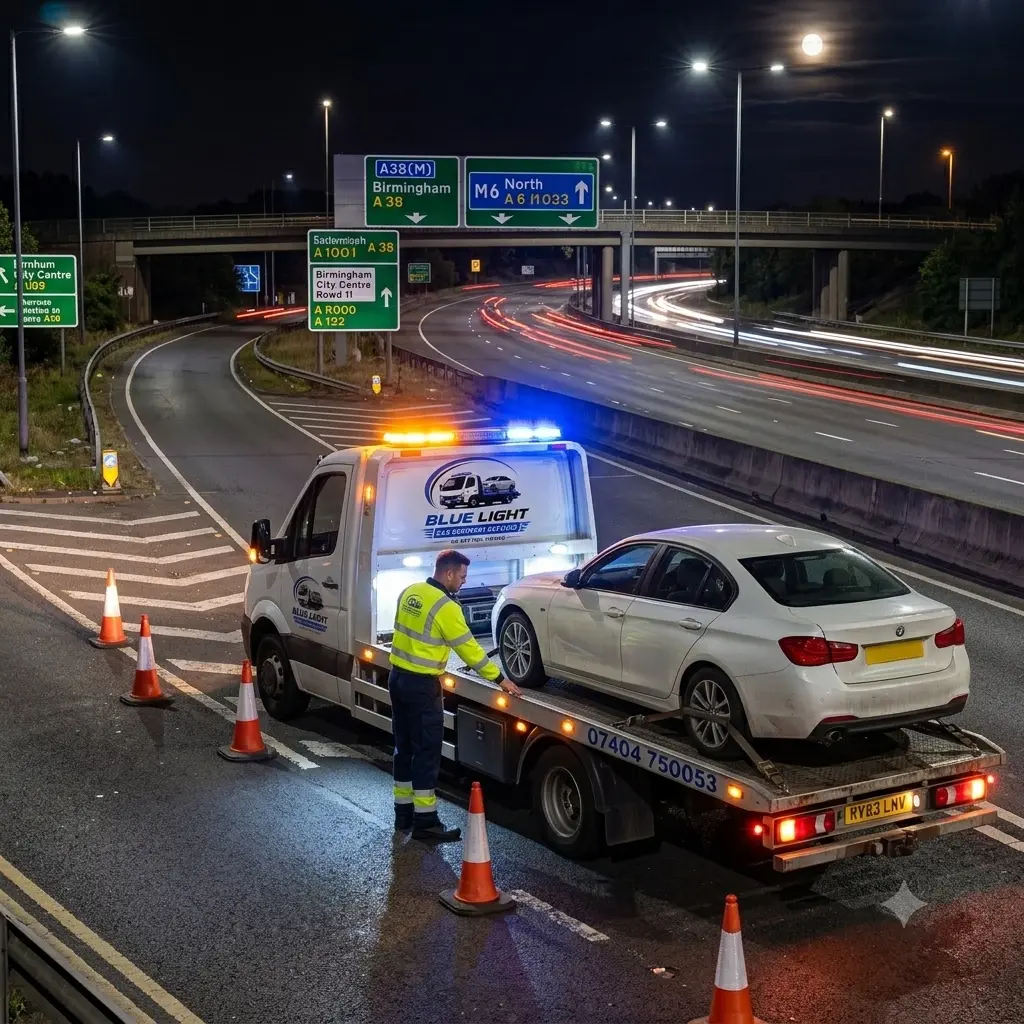
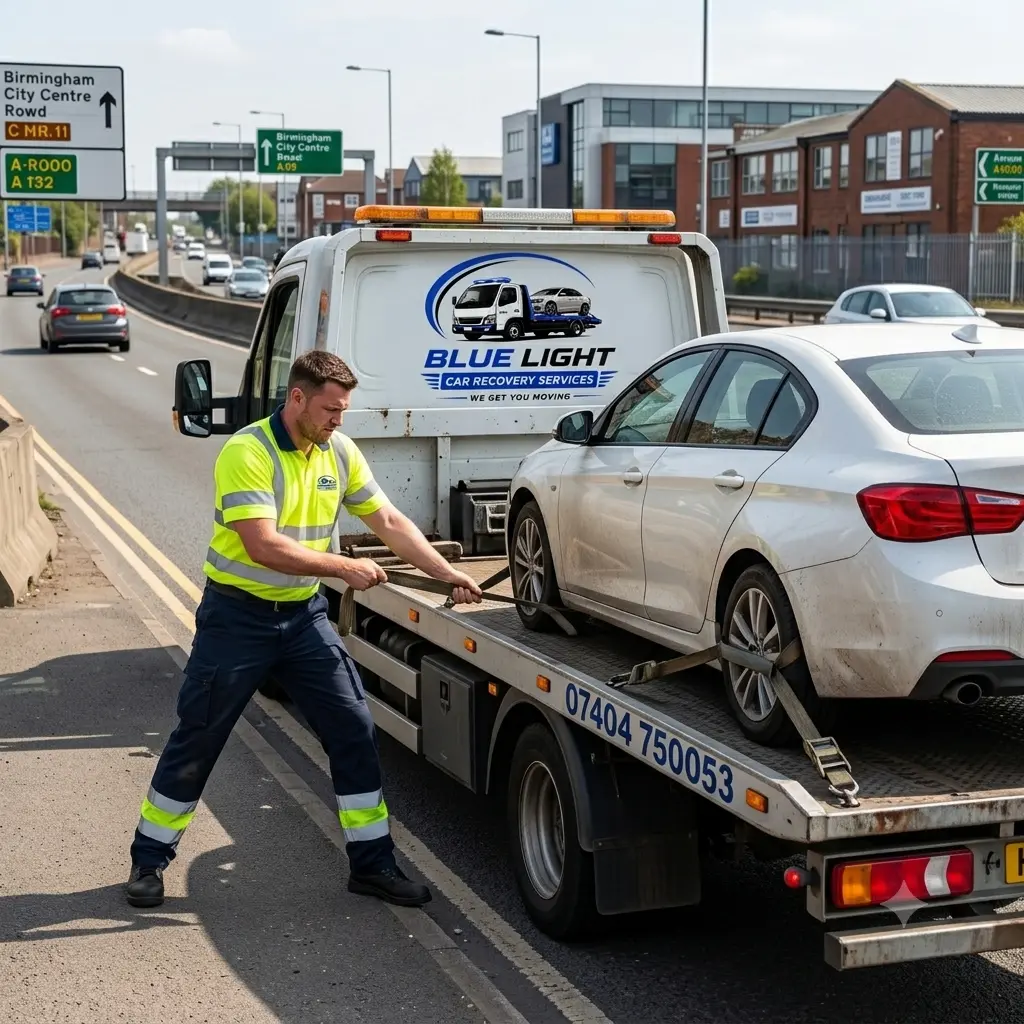
The recovery driver will confirm your details, take a quick look at the vehicle, and load it using the appropriate method — either a standard wheel-lift tow or a flatbed, depending on your vehicle type and condition. Modern EVs and all-wheel-drive vehicles very often require flatbed transport specifically, since towing them the standard way can risk damage to the drivetrain. You don’t need to know this in advance — a competent driver will identify the right method on arrival — but it’s useful to understand why the truck that turns up might not always be what you pictured.
Step 7: Getting to Your Destination
Once loaded, your vehicle is transported to wherever was agreed on the initial call — your home, a garage, a dealership, or an insurer’s approved repairer if you’ve been in an accident, a process explained further in what to do after a car accident. You’ll typically be able to travel with the vehicle in the truck’s cab, though it’s worth confirming this when you book if you have passengers or specific needs.
Step 8: Paying and Wrapping Up
If the price was properly confirmed before dispatch, this step should hold no surprises — you pay the number you agreed to, nothing more. It’s worth keeping a note or receipt of the transaction, particularly if the recovery relates to an accident and you’ll need it for an insurance claim.
Common First-Time Mistakes to Avoid
- Trying to drive further than you should, hoping the problem will resolve itself. This can turn a simple breakdown into a much more expensive repair.
- Not giving an exact location, which delays the truck reaching you and can extend your wait unnecessarily.
- Agreeing to a price without it being confirmed clearly, only to find extra charges added later.
- Standing next to the vehicle on a busy road rather than moving to safety while waiting — a common and avoidable risk highlighted in official National Highways guidance.
- Assuming a membership is required. Many drivers delay calling because they think they need to have signed up in advance — most local recovery services, including Blue Light, work on a pay-per-job basis with no membership needed.
What Makes a Recovery Company Worth Trusting on Your First Call
If you’ve never needed recovery before, you also have no track record with any particular company — which makes it harder to know who to trust when you’re stressed and just want the problem solved. A few things are worth listening for on that first call, even before a truck is dispatched:
- Do they ask the right questions calmly? A good operator will walk you through location, vehicle type, and situation without rushing you or making you feel like you’re wasting their time.
- Do they explain the price clearly, rather than brushing past it? If the person on the phone is happy to talk through exactly what the number covers, that’s a good sign. If they deflect the question, that’s worth noting.
- Do they give you a realistic arrival time, not just “soon”? A specific estimate — even a range — suggests they actually know where their trucks are and how busy they are.
- Are they willing to answer follow-up questions? First-time callers often have two or three extra questions once the basics are covered. A patient, unhurried answer is a good sign you’re dealing with people who do this properly, every day.
None of this requires any technical knowledge on your part — it’s simply about paying attention to how the conversation feels, which is often the clearest signal of how the rest of the job will go.
A Quick Mental Checklist for Next Time
Once you’ve been through a recovery for the first time, it’s worth keeping a short mental note for the future — because unfortunately, breakdowns rarely happen only once in a lifetime:
- Save a trusted local recovery number in your phone before you need it, not during the panic of an actual breakdown.
- Know roughly where your vehicle’s registration and basic details are, since you’ll be asked for them.
- Remember that safety comes first, every time — get clear of traffic before you even reach for your phone.
- Don’t be afraid to ask questions on the call. A first-timer’s questions are exactly the same questions an experienced driver would ask, just asked for the first time.
Frequently Asked Questions
What’s the first thing I should do if my car breaks down?
Get to a safe location away from moving traffic if possible, put your hazard lights on, and then call for recovery. Safety always comes before anything else.
Do I need to know what’s wrong with my car before I call?
No. A simple description — “it won’t start,” “there’s a warning light,” or “I’ve been in a collision” — is enough for a recovery operator to send the right help.
How long will I have to wait for my first recovery?
Most callouts across Birmingham are reached within 30–45 minutes, depending on your exact location and traffic conditions.
Will I know the price before the truck arrives?
Yes, with a reputable operator. A fixed price should be confirmed on the phone before any vehicle is dispatched, so there are no surprises on the invoice.
Do I need breakdown cover membership to use a recovery service for the first time?
No. Pay-per-job recovery, with no annual membership required, is available and often works out cheaper for drivers who rarely break down.
Can I ride in the truck with my vehicle?
Usually, yes — it’s worth confirming this when you call, especially if you have passengers or specific requirements.
Conclusion
A first breakdown or accident can feel overwhelming simply because it’s unfamiliar, not because it’s actually complicated. Get somewhere safe, describe what’s happening clearly, confirm a fixed price before agreeing to anything, and let the recovery team handle the rest. That straightforward process is exactly what Blue Light Car Recovery Services applies to every call across Birmingham, whether it’s someone’s first time or their fiftieth.
If you need recovery for the first time anywhere in Birmingham, get in touch or book an appointment and the team will walk you through everything, step by step.
Blue Light Car Recovery Services — patient, straightforward recovery across Birmingham, 24/7. Call 07404 750053.