Two phrases get mixed up more often than you’d expect, and the mix-up usually happens at the worst possible time — when a car has stopped working and someone is searching for help under pressure. Car Service vs Car Recovery is an important distinction to understand because, although the terms sound similar, they solve completely different problems. Knowing the difference before you need either one means you can call the right people immediately, rather than losing valuable time explaining the wrong situation to the wrong business. This guide breaks down car service and car recovery clearly, explains when each one applies, and helps you recognise which service you actually need.
What Is a Car Service?
A car service is planned, routine maintenance carried out by a garage or mechanic to keep a vehicle running safely and reliably. It’s scheduled in advance — often annually or at a set mileage interval recommended by the manufacturer — rather than a response to something going wrong right now. A typical service usually includes:
- Oil and filter changes
- Brake pad and disc inspection
- Fluid level checks (coolant, brake fluid, screen wash)
- Tyre condition and pressure checks
- Battery health checks
- Lights, wipers, and general safety checks
A car service is closely related to, but not the same as, an MOT test — the annual legal roadworthiness check required for most vehicles over three years old. According to official government guidance, every UK vehicle’s MOT history is publicly recorded, showing pass and fail results, mileage, and any advisories from previous tests. A service is about maintaining the car proactively; an MOT is a legal safety check; neither one is designed to deal with a vehicle that’s already broken down or been in an accident.
What Is Car Recovery?
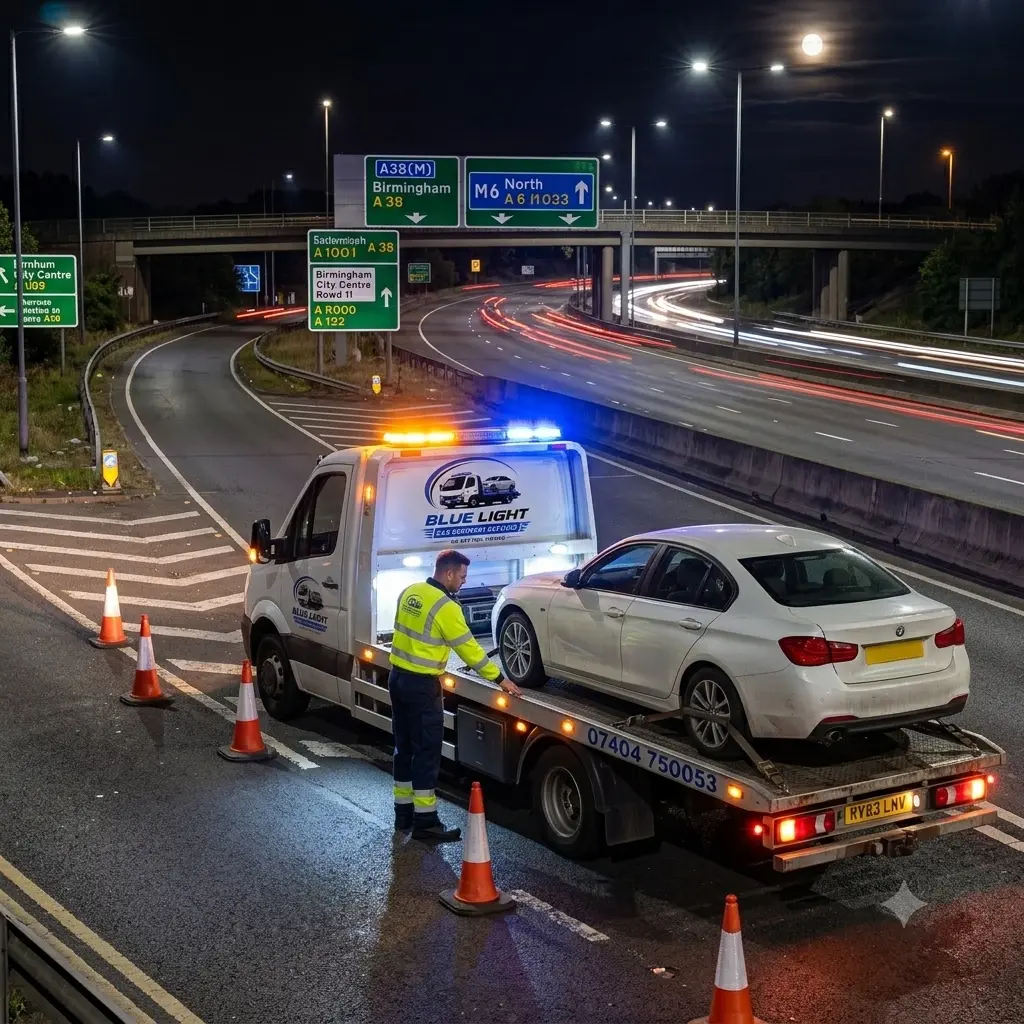
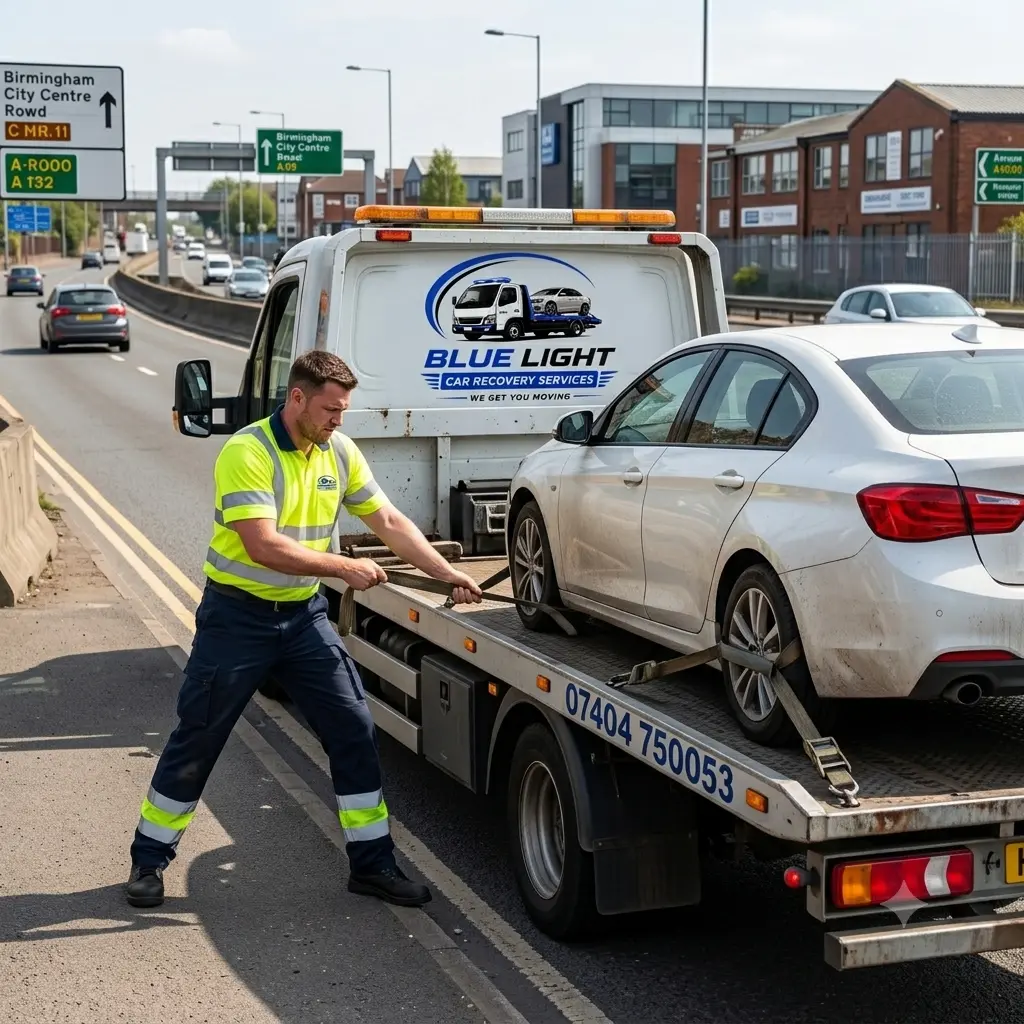
Car recovery is the opposite kind of situation entirely — it’s a reactive, often urgent response to a vehicle that can no longer be driven safely, whether that’s because it’s broken down, been involved in a collision, or simply needs transporting from one place to another without being driven at all. Recovery covers:
- Breakdown recovery — flat batteries, mechanical failures, and anything that leaves a vehicle stranded roadside, covered in detail in breakdown recovery Birmingham.
- Accident recovery — careful, insurer-friendly recovery after a collision, explained in accident recovery Birmingham and what to do after a car accident.
- Vehicle transport — moving a car that isn’t broken down but can’t or shouldn’t be driven, such as a dealership transfer, covered in professional vehicle transportation.
- Junk car towing — removing a non-runner or scrap vehicle entirely, detailed in junk car towing Birmingham.
Unlike a car service, recovery isn’t scheduled weeks in advance — it’s needed immediately, often at unpredictable times, which is exactly why genuine 24/7 availability matters, as covered in 24-hour car recovery Birmingham.
The Core Difference, Car Service vs Car Recovery in One Sentence
A car service maintains a vehicle that’s working; car recovery moves a vehicle that isn’t. Once you frame it that way, deciding which one you need becomes far simpler — the question isn’t “which company should I call,” it’s “is my car currently safe and able to be driven, or not?”
How to Know Which One You Actually Need
You need a car service if:
- Your car is due its scheduled maintenance, or it’s been roughly a year (or the recommended mileage) since the last one.
- A dashboard light has come on but the car still starts, runs, and drives normally.
- You’re preparing for an MOT and want potential issues caught in advance.
- Nothing is wrong right now, but you want to keep the vehicle reliable and avoid problems later.
You need car recovery if:
- Your car won’t start at all, even after a jump-start attempt.
- You’ve broken down at the roadside, on a residential street, or on a motorway.
- You’ve been in a collision and the vehicle doesn’t feel safe to continue driving.
- The car needs to be moved somewhere but genuinely cannot, or should not, be driven there itself.
This distinction is covered from a slightly different angle in our guide on Car vs Vehicle vs Breakdown Recovery, which looks specifically at terminology used within the recovery industry itself.
Why Confusing the Two Costs You Time
If your car has genuinely broken down and you call a garage expecting a “service,” you’ll likely be told they can’t help until the vehicle is actually brought to them — which is exactly the problem, since it can’t be driven there. On the other hand, if you call a recovery company for a routine oil change, they’ll simply redirect you to a garage, since moving a working vehicle isn’t what recovery services are built for. Neither mistake is serious, but both waste time in a situation where getting the right help quickly actually matters — particularly if you’re stranded somewhere unsafe, a scenario covered in our motorway breakdown safety tips guide.
Can the Two Ever Overlap?
Occasionally, yes. If a car breaks down during, or shortly after, a service, the same garage that carried out the work may arrange recovery back to their premises to investigate further — but that’s the garage coordinating a recovery, not the service itself being the solution. Similarly, if a car needs recovering to a garage for its very first service after being repaired following an accident, that’s a recovery job feeding into a future service appointment, not the two blending into one task. In every case, the two remain functionally separate: one is planned maintenance, the other is an unplanned or urgent move.
What This Means for Birmingham Drivers
Birmingham has plenty of excellent garages for scheduled servicing and MOT work, and plenty of recovery operators for breakdowns and accidents — but they’re rarely the same business, and for good reason. A garage is built around a workshop, tools, and technicians working on stationary vehicles. A recovery company is built around trucks, drivers, and a fleet ready to reach a vehicle wherever it’s stopped. Trying to combine the two rarely works well, which is why a specialist recovery service like Blue Light Car Recovery Services focuses entirely on getting vehicles moved safely — to your chosen garage, home, or destination — rather than attempting to also carry out the mechanical work itself.
What to Do Right Now, Depending on Your Situation
If your car is running fine but due attention: book a service with a local garage at a time that suits you — there’s no urgency, and doing it proactively is always cheaper than dealing with a problem after it’s already happened.
If your car has just stopped working, or you’ve been in a collision: get to a safe location if you can, then call for recovery. Describing the situation clearly — location, vehicle type, and what’s happened — gets the right help to you fastest, a process explained fully in our first-timer’s guide to vehicle recovery in Birmingham.
Frequently Asked Questions
Is car recovery the same as roadside assistance?
They’re closely related — roadside assistance often refers to on-the-spot fixes like a jump-start or tyre change, while recovery involves actually moving the vehicle when it can’t be fixed at the roadside. See emergency roadside assistance for more detail.
Can a garage arrange recovery for me?
Some garages coordinate recovery on your behalf, but the actual towing or transport is still carried out by a dedicated recovery company with the right vehicles and equipment.
Do I need a service or recovery if my check engine light comes on?
If the car still starts, runs, and drives normally, book a service or diagnostic check with a garage. If it won’t start, is making unusual noises, or doesn’t feel safe to drive, call for recovery instead.
Is car recovery only for emergencies?
No — recovery also covers non-emergency situations like vehicle transport, moving a car that isn’t currently being driven, from one location to another.
Does Blue Light offer car servicing as well as recovery?
No — the focus is entirely on recovery, towing, and vehicle transport, which allows the team to specialise properly in getting vehicles moved safely rather than splitting focus with workshop repairs.
Who should I call if I’m not sure which one I need?
If in doubt, ask yourself whether the car is currently safe to drive. If yes, it’s likely a service question for a garage. If no, it’s a recovery situation — call a recovery company directly.
Conclusion
“Car service” and “car recovery” solve two entirely different problems, and knowing which one applies to your situation saves real time when it matters most. A service keeps a working car running well; recovery gets a vehicle that can’t be driven to safety. Understanding that distinction means you’ll always know exactly who to call — and if it’s ever the second one, Blue Light Car Recovery Services is available across Birmingham, 24 hours a day.
If your vehicle needs recovering anywhere in Birmingham, get in touch or book an appointment and the team will get things moving quickly and safely.
Blue Light Car Recovery Services — dedicated vehicle recovery across Birmingham, 24/7. Call 07404 750053.